How to Trade During High Volatility: A Simple Plan

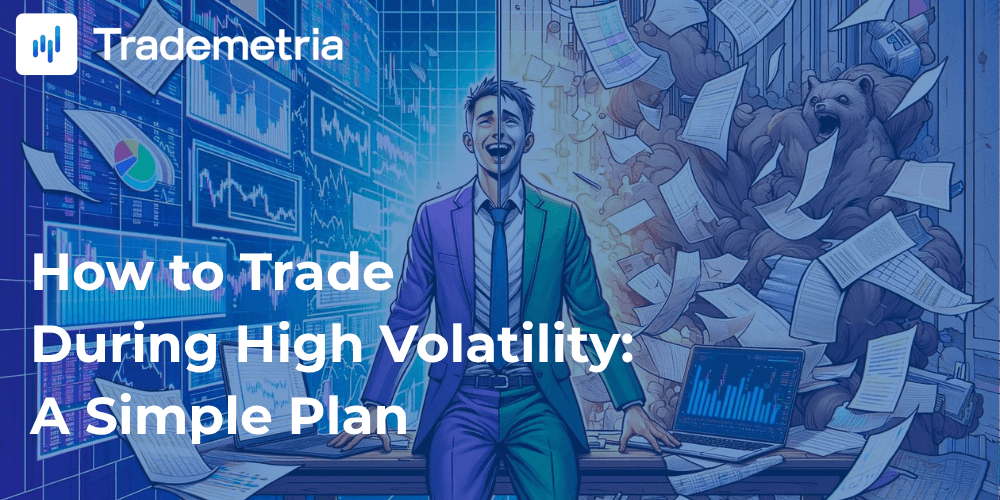
Volatility is back, bringing larger price swings, faster market reactions, and sudden reversals that can catch traders off guard. For many, this environment feels full of opportunity.
However, the reality is more nuanced.
Most traders don’t lose money because volatility exists — they lose because they are not prepared to handle it properly.
So the real question becomes:
Do you actually have a plan for when volatility hits?
In this article, we’ll break down a simple, practical framework to help you stay in control when markets become unpredictable.
What Changes When Volatility Increases
When volatility rises, the market behaves differently:
- Price moves become faster and larger
- Stop losses get hit more frequently
- Emotional pressure increases significantly
This means your usual trading approach may stop working.
>>Volatility doesn’t just create opportunity —
it exposes weaknesses in your strategy and execution.

A Simple Trading Plan for High Volatility
Here’s a practical framework you can follow:
1. Decide Whether You Should Trade at All
This is the step most traders skip.
Before anything else, ask yourself:
- Do I understand what’s causing this volatility?
- Do I have a strategy designed for this condition?
If the answer is no, the best decision might be:
>>Don’t trade.
Staying out is also a strategy — and often the smartest one.
2. Reduce Your Risk Per Trade
Volatility is not a signal to increase position size.
In fact, it’s the opposite.
Example:
- Normal conditions: risk 1% per trade
- High volatility: risk 0.5% or less
Why?
Because price can move aggressively against you before going in your direction.
3. Wait for Confirmation (Avoid Impulsive Entries)
One of the most common mistakes:
>> Entering on the first strong move.
Instead:
- Wait for a pullback
- Look for structure
- Let the market “show its hand”
Patience becomes a competitive advantage here.
4. Define Everything Before Entering
Before you enter a trade, you should already know:
- Your entry
- Your stop loss
- Your target
With Trademetria, you can predefine all of these settings and track what works over time, allowing you to build a structured and consistent trading process instead of making decisions on the fly.
5. Accept Losses Quickly
In volatile markets:
- You’re either right quickly
- Or wrong quickly
Holding onto losing trades in this environment is one of the fastest ways to damage your account.
>> Cut losses early. No hesitation.
6. Limit the Number of Trades
More movement does not mean more trades.
Set a clear rule, for example:
- Maximum 1–3 trades per day
This helps you avoid overtrading — one of the biggest risks during high volatility.
7. Review Your Performance After the Market
This is where real improvement happens.
After trading, ask:
- Did I follow my plan?
- Did I act emotionally at any point?
- Did I respect my risk rules?
Without review, there is no progress.
Key Takeaway
A solid volatility plan is not about predicting the market.
It’s about controlling your behavior.
In simple terms:
- Trade less
- Risk less
- Wait more
- Exit faster
- Think before, not during
See more on how to avoid losses in trading here.
Final Thought
Volatility doesn’t reward speed.
It rewards preparation.